Ceramic Insulator

Updated: Oct 12, 2023
Date: early 19th Century
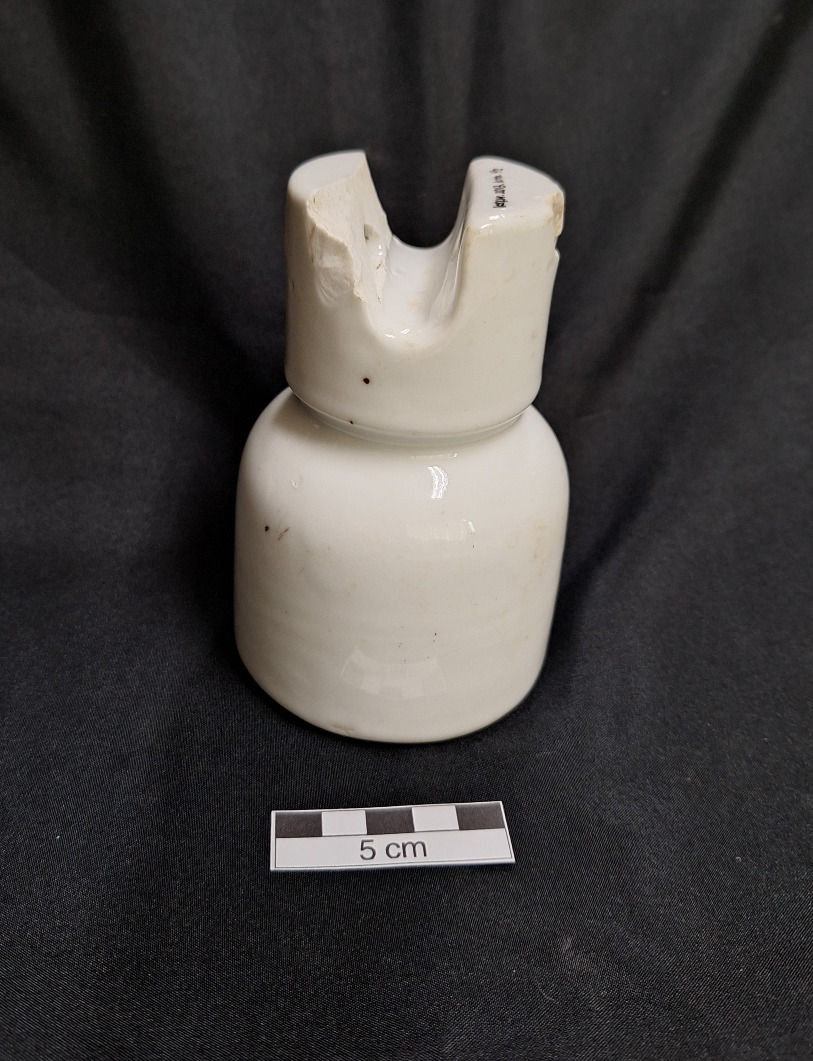
An electrical insulator is a material in which electric current does not flow freely. The atoms of the insulator have tightly bound electrons that cannot readily move. Insulators for high-voltage power transmission are made from glass, porcelain, or composite polymer materials. Porcelain insulators are made from clay, quartz, alumina, and feldspar and are covered with a smooth glaze to shed water.
The first ceramic electrical insulator was introduced in 1897 when frequent short circuits occurred due to the use of wood-based insulators. The National Fire Protection Association in America then issued the National Electrical Code, one of which mentions ceramics as a material that is cheap, strong, non-flammable, and has a high resistance to electricity. In the end, ceramic insulators were used to replace some insulators from other materials and are still used today.
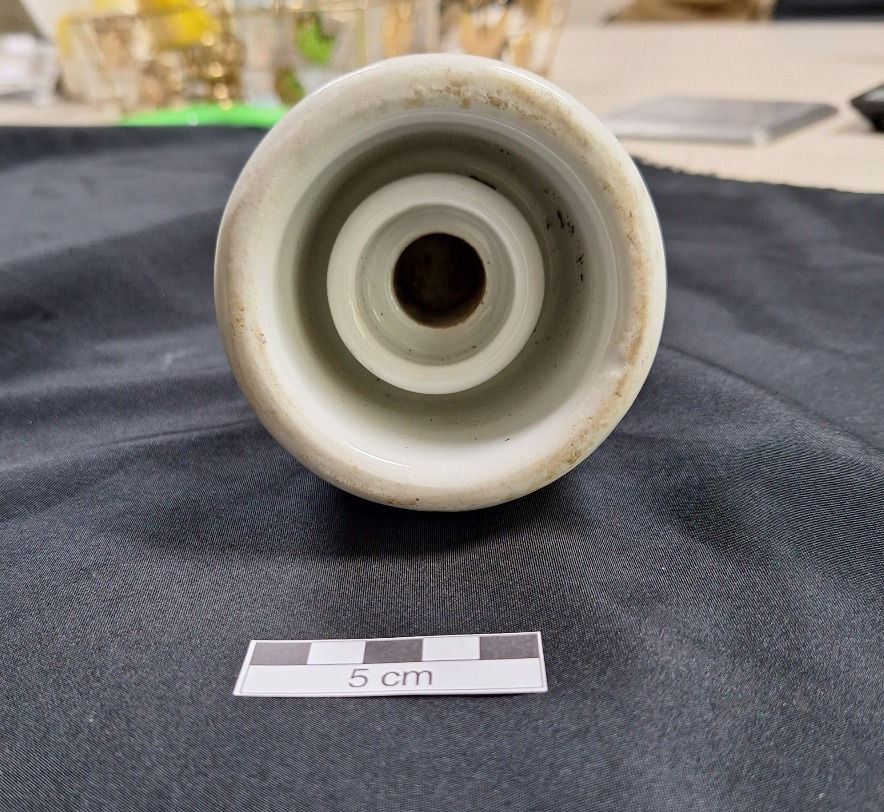
The electrical insulator found during the excavation of the Yogyakarta Archaeological Centre (Balai Arkeologi D.I. Yogyakarta, now known as BRIN) in the Kota Lama area in 2013 is made from white-glazed ceramic. The insulator has a total height: 11.7 cm, with a top diameter: 5.7 cm, a base diameter: 7.8 cm. At the head the locking interval: 2.1 cm, with a depth of 1.9 cm. The base which is the bolt holder has a depth of: 8.2 cm.
By profile design, it has similarities with the German insulator shape, which includes a pin type with a necked tube shape, and at the top, there is a hollow that functions as a cable lock. The function of the insulator is to prevent the free flow of electricity from contacting other objects (such as materials on electricity poles). In addition, the glaze that coats the shell acts as a barrier against contamination (water, dust, and smoke) so it can dissolve and not become a conductor in the insulator's surface. This type of ceramic insulator is commonly used as a voltage network insulator with a support pole or tower. It has good properties used to bear load or pressure and has a stable material when used in a stable energy flow making it suitable for electricity distribution and transmission. Ceramic insulators are also able to isolate the transmission of electricity so it doesn't cause the free flow of electricity to hit the object in contact with the pole.
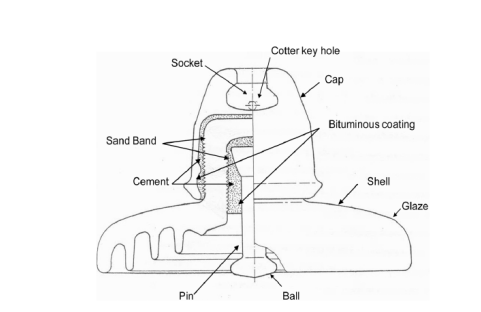
Based on this, it is possible that the ceramic insulators found were used as insulators on electricity poles in the Dutch East Indies. The presence of ceramic insulators indicates that the electricity network in Semarang has developed. Nowadays, ceramic insulators are still in use to isolate electricity flow as electricity distribution in Semarang.


Comments